 Image 1 of 2
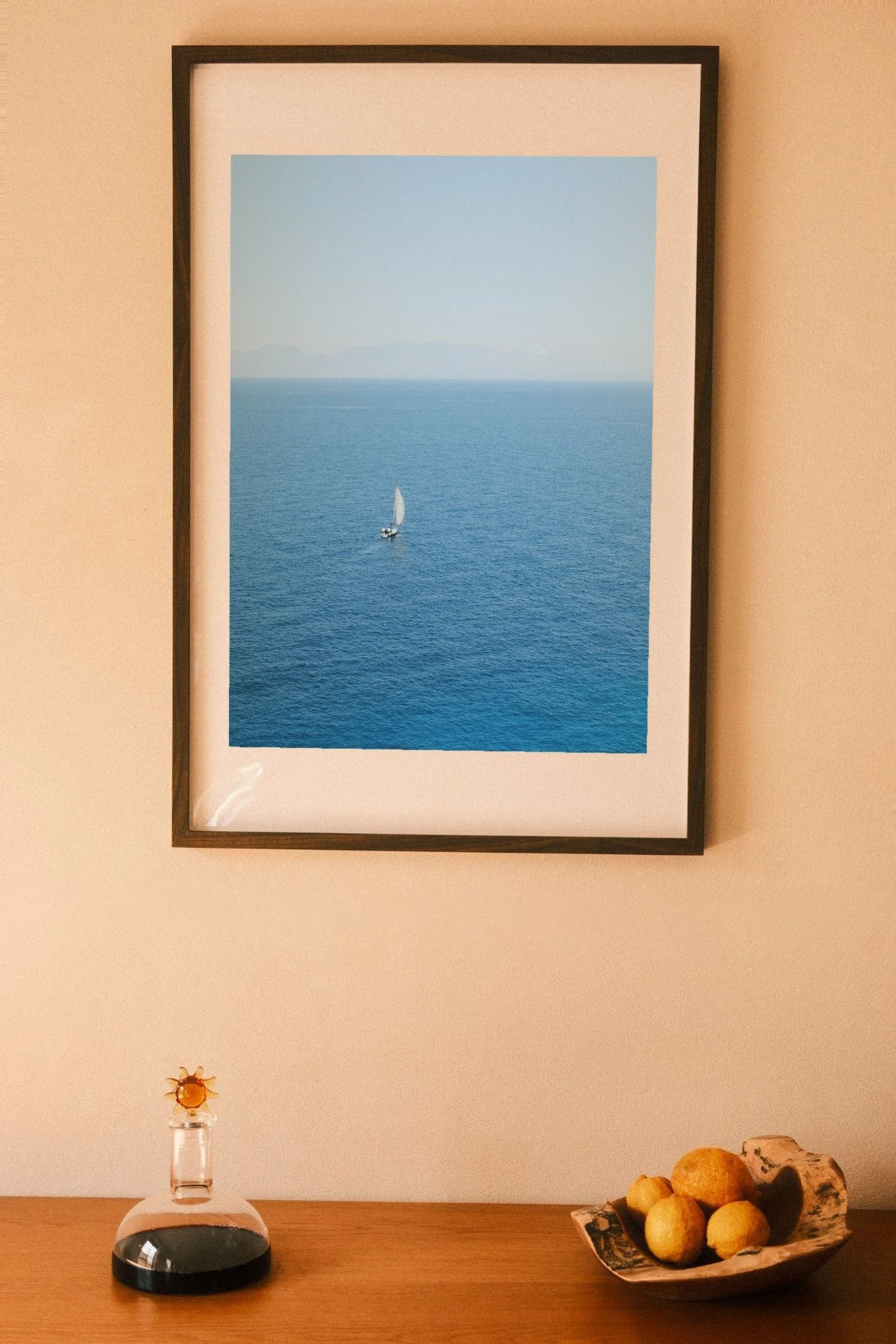 Image 2 of 2
"Con diez cañones por banda,
viento en popa, a toda vela,
no corta el mar, sino vuela
un velero bergantín.
Bajel pirata que llaman,
por su bravura, el Temido,
en todo mar conocido
del uno al otro confín."
Canción del pirata, José de Espronceda, 1835
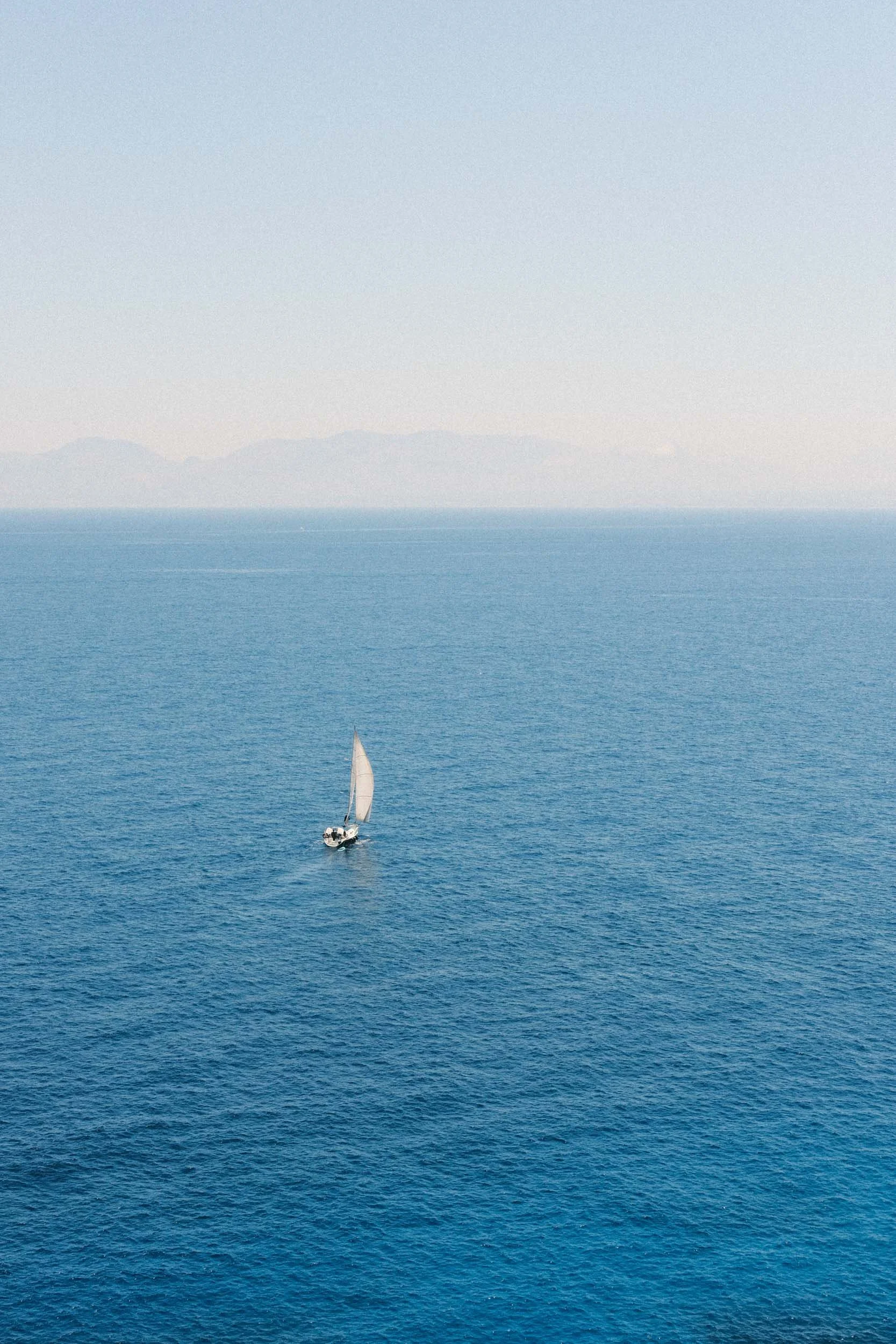
Viento en popa, Spanish for "wind astern". Sailing with the wind at your back, under full sail, nothing in the way. In Spanish it also means that life is going well. The words come from Canción del pirata, a poem generations of Spanish schoolchildren have learned by heart:
‘‘Ten cannons on either side,
wind astern, under full sail,
she does not cut the sea, she flies,
a swift brigantine.
A pirate ship they call
the Feared, for her daring,
known on every sea
from one edge of the world to the other.’’
A single sail off Scopello, Sicily. The wind, the open water and a poem we once knew by heart.
For a moment, we are kids again.